POWER Interfaith calls on City Council to pass an urgent affordability package centered on (1) freezing PGW rate hikes; (2) passing a fair wealth tax; and (3) providing homeowner property tax relief through increasing the Homestead Exemption.
Philadelphia is facing a rapidly worsening affordability crisis. City Council has taken important steps attempting to improve the situation, and is in the position to do more at a time of critical need.
Working families need stable budgets, and part of the promise of living in Philadelphia is that the City maintains control over critical levers in the fight for affordable living.
Particularly in an era of federal chaos and ongoing tensions abroad that have only raised costs further, Philadelphia must take exceptional steps to insulate and protect its residents. That includes offering economic buffers and new revenue streams that will mitigate known upcoming catastrophes like the pending Medicaid cliff that could shut down FQHCs across the City and deeply impact the nearly 42% of Philadelphians who use Medicaid,1 or the thousands of LIHTC homes that will soon hit a market where the best bidders will be private equity instead of the City itself.2 A static budget will never respond well to dynamic conditions, and working people are inevitably the first to suffer when conditions change while budgets stagnate.
The context of this call is critical. We are living in an era of unrelenting and often unbridled chaos. Upcoming cuts to Medicaid will deeply burden families and the City financially as FQHCs suffer risk of collapse and more and more people go uninsured, with the multimillion dollar price tag that carries for City revenue. Housing costs are rising, utilities are going up, and so is the cost of filling a car with gas or a refrigerator with food. There could not be a worse time for families to have to take on another unexpected expense, and at the same time the City will soon find itself in urgent need of more revenue. Council has alternatives to raising taxes for working families or approving a capital budget for PGW despite its insistence on unnecessary rate hikes.
There are clear paths available to Council should it choose to invest its political capital in solutions that meet the scale of the affordability crisis.
POWER Interfaith calls on City Council to pass an urgent affordability package centered on (1) freezing PGW rate hikes; (2) passing a fair wealth tax; and (3) providing homeowner property tax relief through increasing the Homestead Exemption. Doing so will help working families in Philadelphia plan for the future and budget for basics during a time when prices are soaring and every season brings new disruptions.
City Council can pressure PGW to commit to freezing gas bill rates for 5 years through withholding an approving vote on PGW’s capital budget
City Council can provide needed relief for homeowners by increasing the Homestead exemption to the highest legal limit.
City Council can pass the Fair Wealth Tax, a 0.4% tax on the value of an individual’s stocks, bonds, and mutual funds, excluding pensions, 401k’s, and 529 college funds
City Council can pressure PGW to commit to freezing gas bill rates for 5 years through withholding an approving vote on PGW’s capital budget
Last year, residents who had difficulty paying their gas bills also could not access LIHEAP funding due to the federal government shutdown – yet PGW raised rates by 6.6%,3 increasing projected revenue by $63 million annually – a 9.3% jump that came despite PGW self-reporting that it would be financially stable for the next 5 years.4
Although the City has some programs to mitigate the hikes for lower-income families, the income threshold is just 150% of the federal poverty level, even though many families continue to struggle with income at 300% of the poverty level.
That means that PGW rate hikes end up impacting families making more than $40,000 a year, and while rate hikes are supposed to be limited to ensuring stable gas supply, revenue transfer requirements and maintenance costs are met, again, PGW has already articulated to Council that it is in a fiscally sound position for the next 5 years, through 2032. If PGW is in a financially stable position, why is it pursuing rate hikes that will disproportionately burden working families?
Rate hikes are also authorized for compensation packages for executives at PGW, and the hikes appear to coincide neatly with PGW’s projected net earnings reduction in 2032.5 Given stable revenue projections and no newly articulated need for maintenance or other operational expenses, why should the City approve increased gas prices?
Although Council has recently departed its habit of using budgetary approval authority to make specific demands of agencies, the Charter provides Council that exact authority.6 Council has clear legal authority to withhold approval of a budget submitted by PGW; no one can force Council to approve a budget. If it does not like aspects of a budget, it can refuse to vote for it, even if it has delegated authority to produce a budget to another entity.
PGW is asking Council to prop up net earnings even though existing revenue streams are more than enough to cover PGW’s costs. PGW would like more money from working families, without any articulated reason. Council does not have to reflexively approve that desire, and can withhold a vote on the capital budget until PGW commits to freezing gas rates for 5 years.
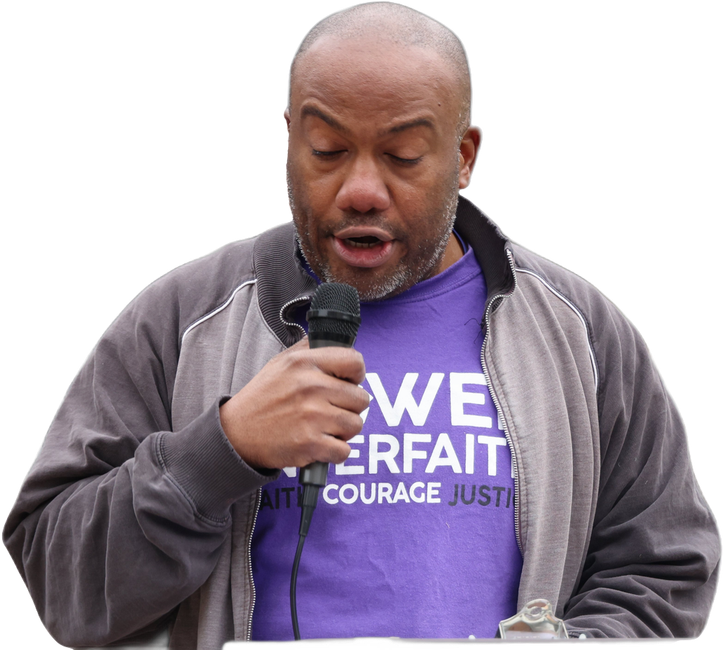
My congregants are struggling to afford the basic necessities of life and the We Make Philly agenda would help lower costs for my people who need it most.
A gas bill freeze would enable my church to further fulfill its mission by opening the doors of the church for community programs without the added financial stress.
City Council can provide needed relief for homeowners by increasing the Homestead exemption to the highest legal limit.
Because the Exemption is tied to property values, and because the OPA recently completed a significant round of assessments that increased property values across the City, Council will have the opportunity to again support working families struggling to pay bills by increasing the value of the Homestead Exemption.
We defer to the OPA and legal framework that determines the maximum value of the Exemption,7 although we anticipate the number to be roughly $122,750.
Making this increase automatic would facilitate homeowners’ confidence in and ability to plan budgets, make adjustments elsewhere, and ultimately stay in their home. It is worth enshrining and automating Council’s excellent legislative commitment to helping folks struggling to keep up against gentrification and soaring prices.
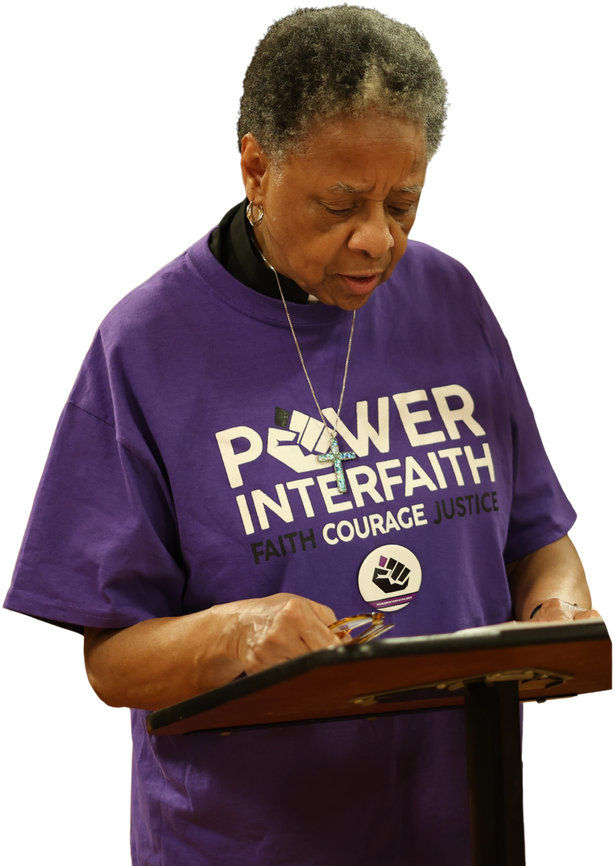
Property tax relief would mean I could breathe easier, and maybe even start saving some money again.
City Council can pass the Fair Wealth Tax, a 0.4% tax on the value of an individual’s stocks, bonds, and mutual funds, excluding pensions, 401k’s, and 529 college funds
Even though the Pennsylvania Constitution’s Uniformity Clause often pre-empts a progressive tax structure, the Pennsylvania Supreme Court has never held that a wealth tax is illegal and severed unconstitutional portions of an intangible property tax structure while leaving the rest intact.8
Philadelphia can and should create new revenue streams through requiring the rich to pay their fair share. New revenue is critical to mitigating further destruction to our schools, and will be critical to protecting our residents’ healthcare – particularly when deep cuts to Medicaid by the Trump Administration have put our local healthcare ecosystem including FQHCs at severe risk.
Beyond the short-term risks imposed by the federal government, long-term trends in wealth distribution also add urgency to passage of a wealth tax. Income inequality has worsened, with the top 10% of income earners holding 70% of wealth while the bottom 60% hold just 8%.9 Both metrics are worse than they were in the late 1980s, and indicate that trickle-down economic policies have failed to address the needs of working people.
While a wealth tax may feel like a tall order, it has been a part of Philadelphia’s history for more years than otherwise. Counties repealed the wealth tax in Pennsylvania in early 1990s, coinciding with significant and systemic redistribution of wealth from working people to the rich. And the Uniformity Clause does permit exclusions on the type of wealth taxed, such as personal bank accounts or retirement accounts, so long as the exclusion is standard for the industry being taxed.10
Although Councilmember Kendra Brooks recently re-authorized hearings on a wealth tax,11 no hearing has been held for reasons that are unclear to our membership. Authorizations last two years: Council can and should hold a hearing on a wealth tax as soon as possible, and certainly before the next budget cycle.
Evidence directly contradicts the first claim: There is little to no evidence of wealth flight, because people wealthy enough to choose where they live tend to enjoy where they live and not want to leave.12 While a few rich folks may flee to Florida, the vast majority will not.
The second claim is serious – there will be Black families trying to build wealth that will be impacted by a wealth tax. However, the wealth tax also directly addresses a key driver of the racial wealth gap in Philadelphia. Median stock holdings in Black families ($7,000) are more than 6 times lower than white families ($44,500); Councilmember Brooks’ bill would charge $4 for every $1,000, or $28 per year for the median Black family that holds stocks.
On balance, generating some $250 million in revenue annually presents a significant opportunity for the City to improve middle class Black families’ economic environment at a per-family value far exceeding $28. Because some 70% of that $250 million will come from the 5% of the wealthiest people in the City, the wealth tax would immediately become one of the most significant mechanisms to promote equitable and sustainable growth in the City.
The third claim is true, but also offers a path forward. The City can make a good-faith effort to collect taxes, prioritized by anticipated revenue, with sufficient resources to pursue tax fraud where appropriate. Cities are not required to spend more money collecting a tax than the tax would generate. If the City makes a good-faith effort to generate a reasonable cut-off point for intangible property that would maximize its efficient collection of a wealth tax, Pennsylvania Supreme Court precedent clearly authorizes such tax structures.13 If the City can show it cannot efficiently collect intangible wealth below a certain threshold, it does not have to do so. The City already interacts with the IRS, including data sharing; it would be challenging for wealthy residents to evade the Philadelphia taxing authority without also lying to the federal government.

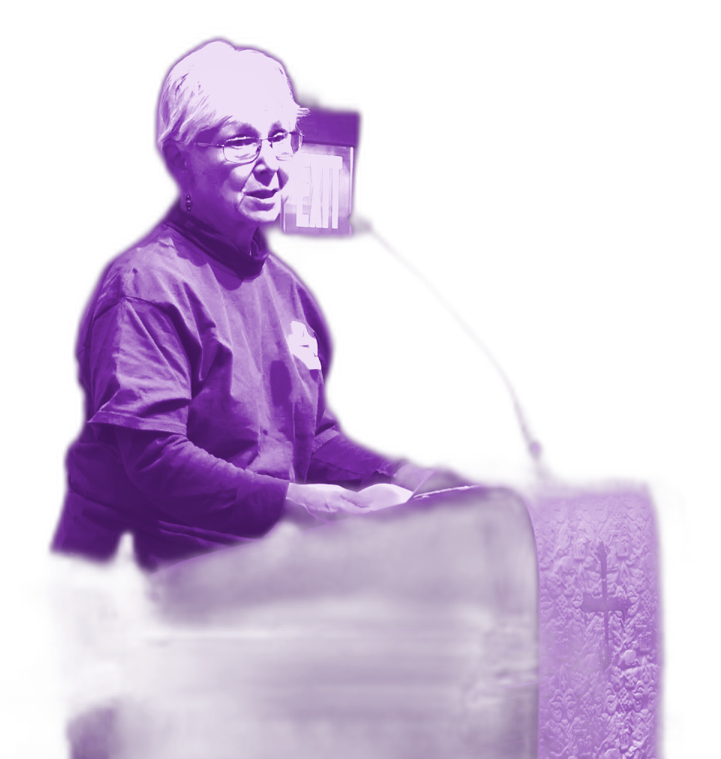
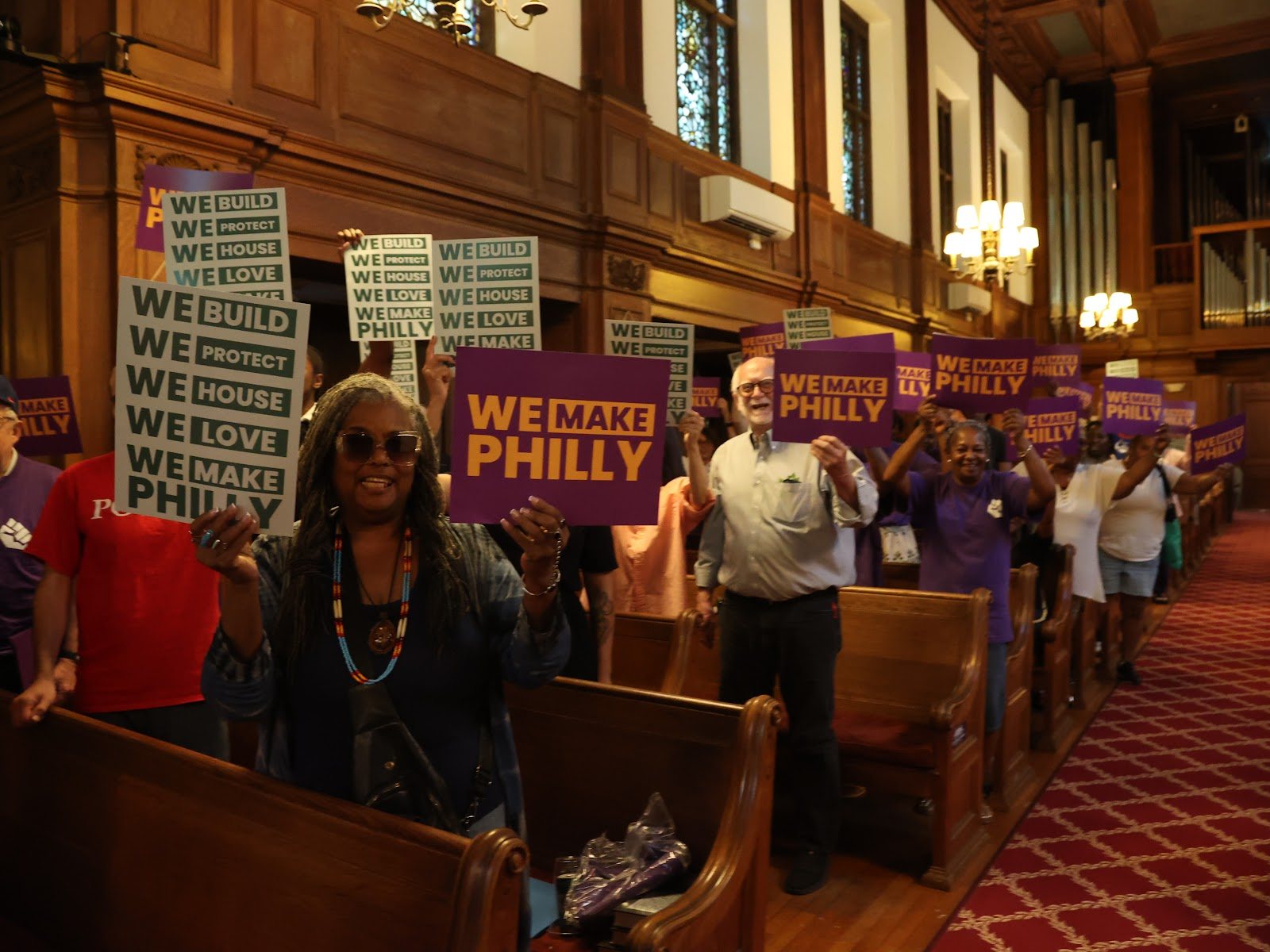
The We Make Philly Campaign will bring revenue to the city but will also make Philadelphia an affordable place for myself, our congregants and neighbors to live.

A wealth tax would make sure our public schools have enough money to thrive, not just survive.
Support the We Make Philly agenda by joining us in building a city that works for working people... Fill out the sign-up form below to stay up to date
POWER Interfaith is a coalition of dozens of congregations, representing 20,000 members, across every Philadelphia City Council District. The following congregations are proud coalition members of the We Make Philly Agenda: